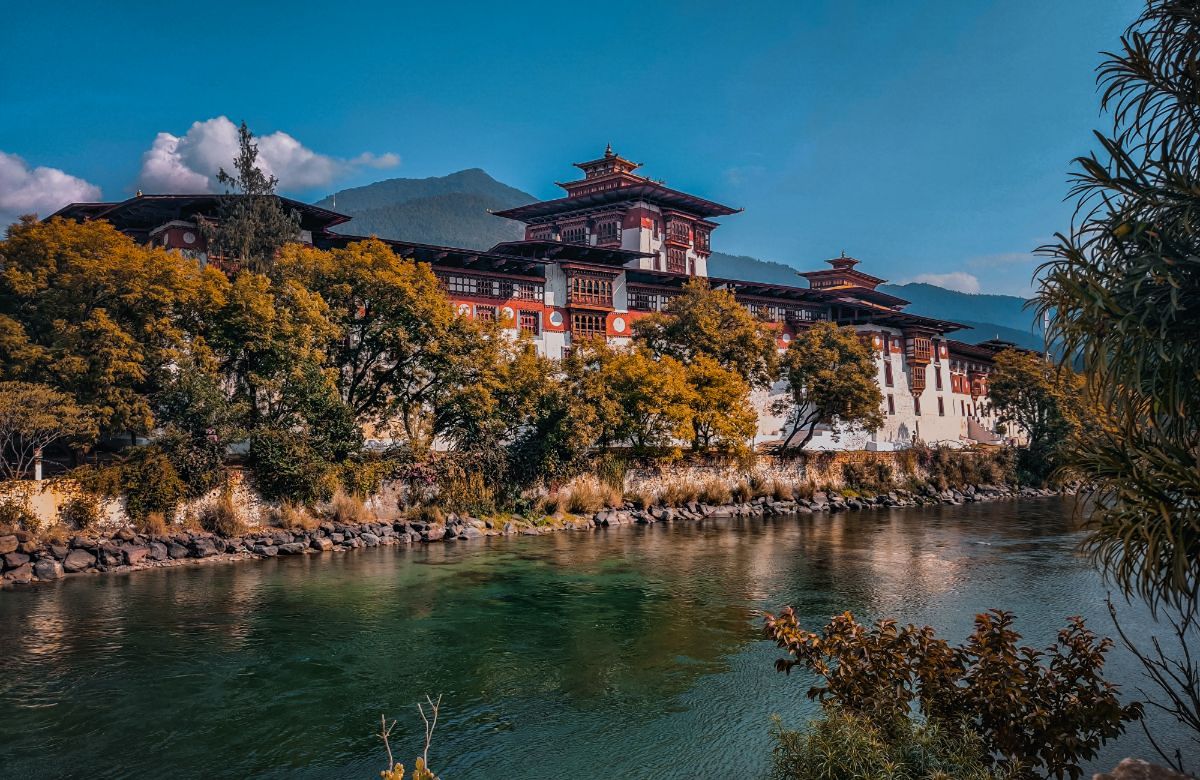
Bhutan’s largest spring festival, with the Guru Thongdrel unfurled before dawn on the final morning — and four days of quiet valley either side of it.
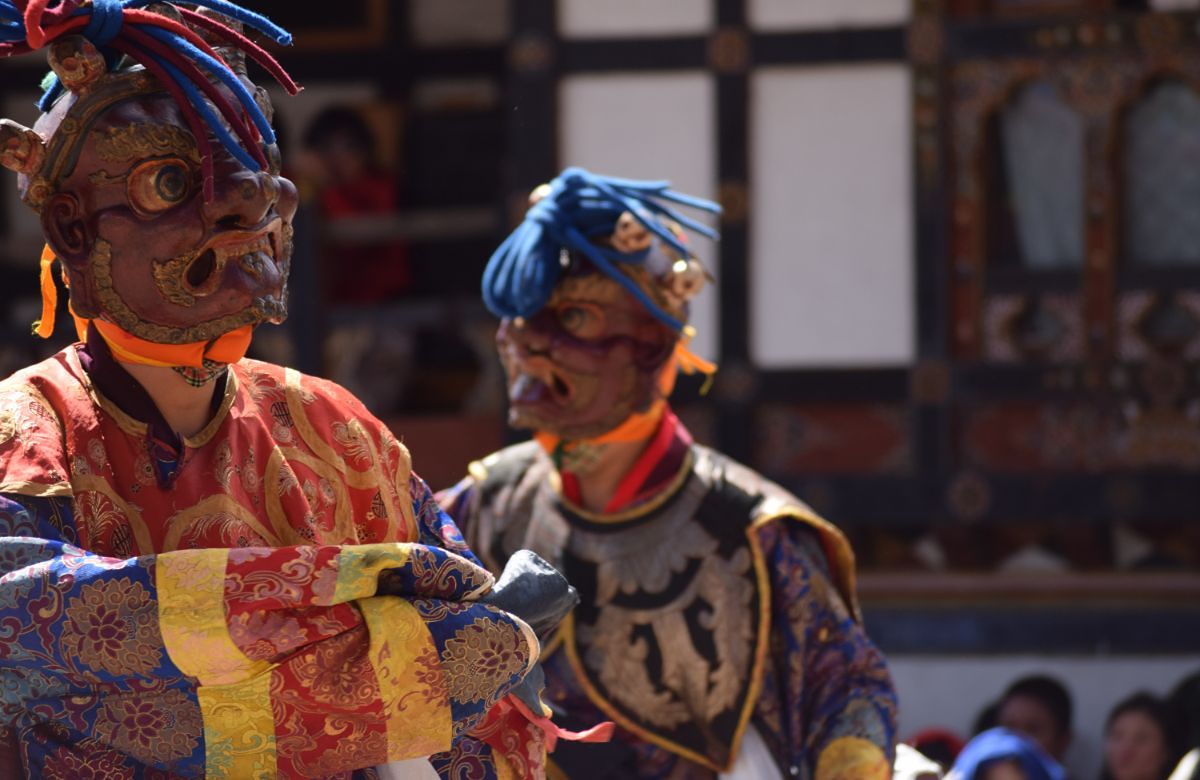
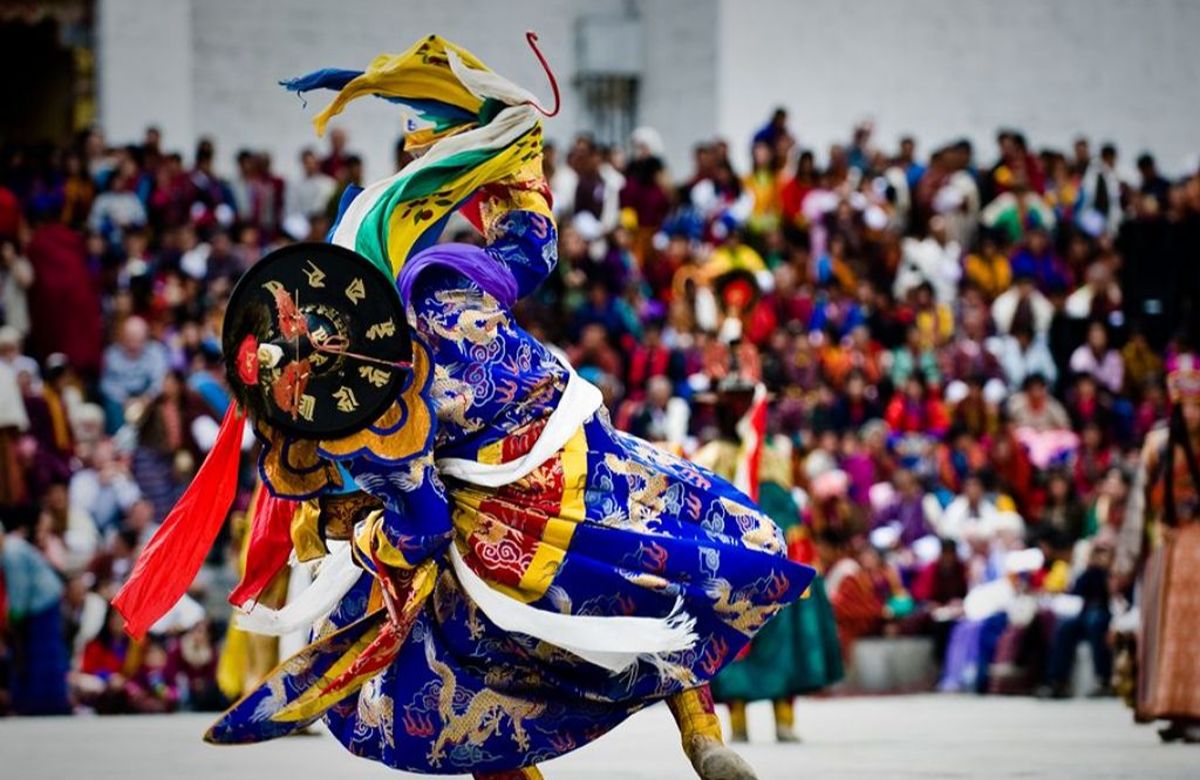
A tshechu is not a performance. It is a religious observance, danced by monks and trained laymen in masks that represent wrathful and peaceful deities, and the Bhutanese attend it to accumulate merit. Families arrive in their finest kira and gho, sit on the flagstones from early morning, and stay all day. Visitors are welcome, and if you sit down and stay put you will be handed food within the hour.
The moment everybody waits for comes on the last morning. Before first light, a thongdrel — an appliqué silk scroll several storeys high — is unrolled down the face of the dzong. It is displayed only in darkness and rolled away before the sun touches it, because sunlight would damage the silk, and because seeing it is said to be enough on its own. We are in position by half past four.
Around the festival we have kept the days deliberately quiet: the Haa valley over the Chele La, Taktsang on an acclimatised pair of legs, and an afternoon in Thimphu. Festival weeks fill the valley, so we book accommodation the season before — enquire early.
This journey is quoted for your dates, your party size, your accommodation preference and anything you want changed. Government fees are shown as separate lines.
Written itinerary and full quotation usually within 24 hours. Nothing to pay to ask.
Written the way we would actually run it — with the drives, the walking hours and the altitude you sleep at, so you can judge the days for yourself. Anything here can be changed before you travel, and most of it can be changed on the morning.
Transfer into the valley and a gentle first afternoon at Kyichu Lhakhang. Your guide will walk you past the dzong to show you where we will sit, and explain how the days are ordered.
In the courtyard from early morning. The day builds through the Shinje Yab Yum, the dance of the Lord of Death, and the Durdag, the dance of the protectors of the cremation grounds. Between dances the atsara clowns work the crowd. Bring a hat, a cushion and patience; we bring lunch.
We leave the hotel at half past four for the unfurling of the Guru Thongdrel in darkness, and stay for the blessing queue as the courtyard fills. Back for a late breakfast, and the rest of the day free.
The highest motorable pass in the country at 3,988 metres, through rhododendron forest that is in flower for exactly this fortnight. Down into Haa, a narrow valley of barley and buckwheat closed to outsiders until 2002, and its two temples — the White and the Black.
The long way round, following the Haa Chhu down and joining the highway west of the capital. Afternoon in Thimphu: the craft school, the Memorial Chorten, and Tashichho Dzong at the close of the day.
Back over to Paro for the Tiger’s Nest — five to six hours round trip, and considerably easier on legs that have spent a week at altitude. A hot stone bath in a farmhouse afterwards, if you would like.
Early transfer for the morning flight.
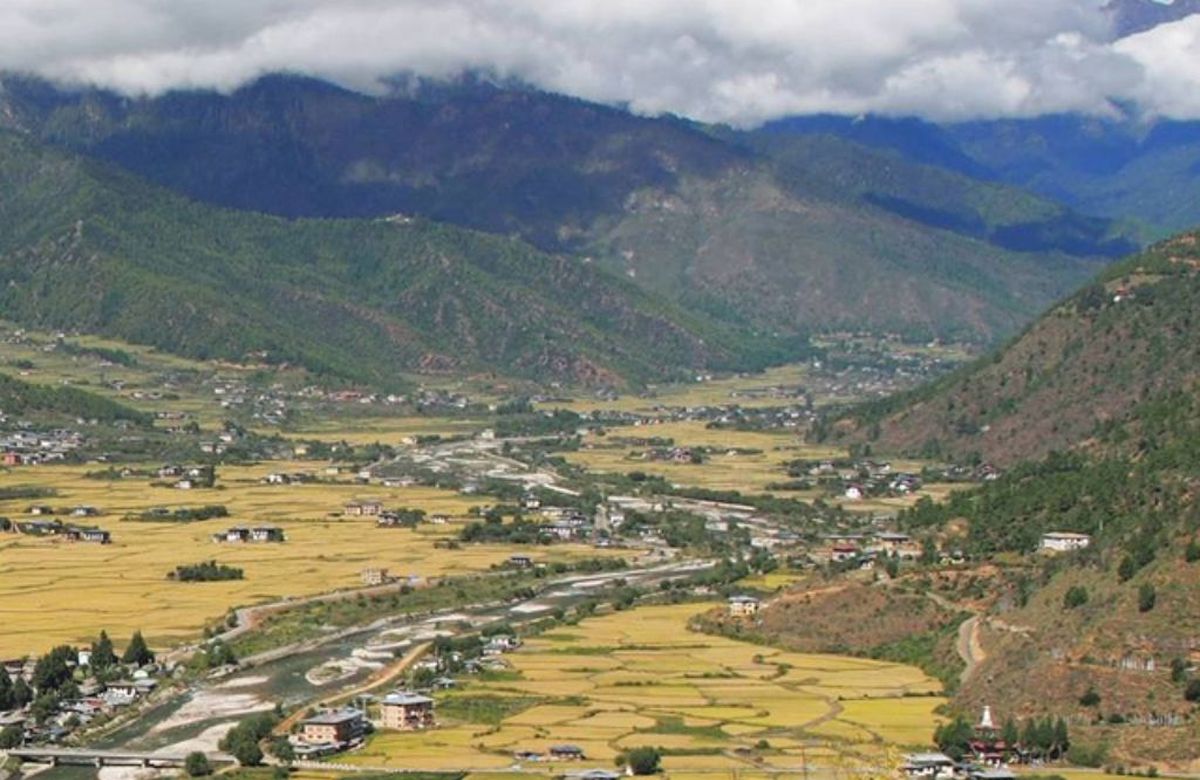
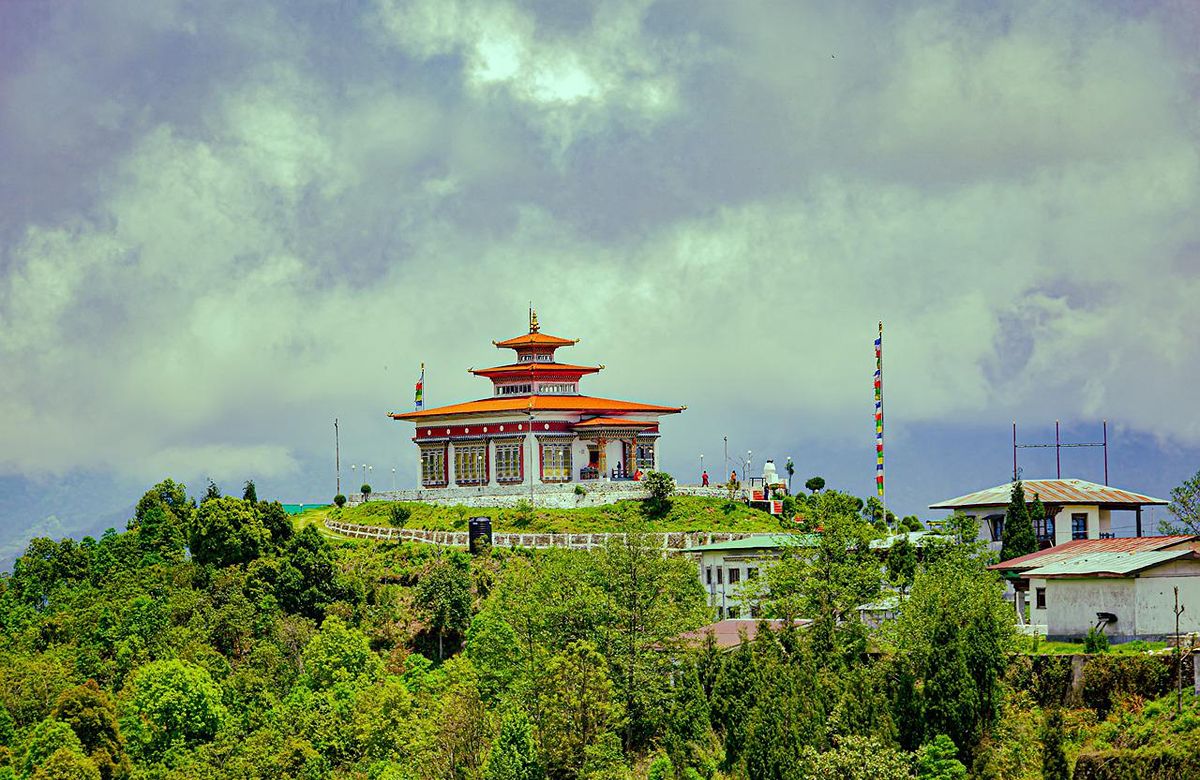
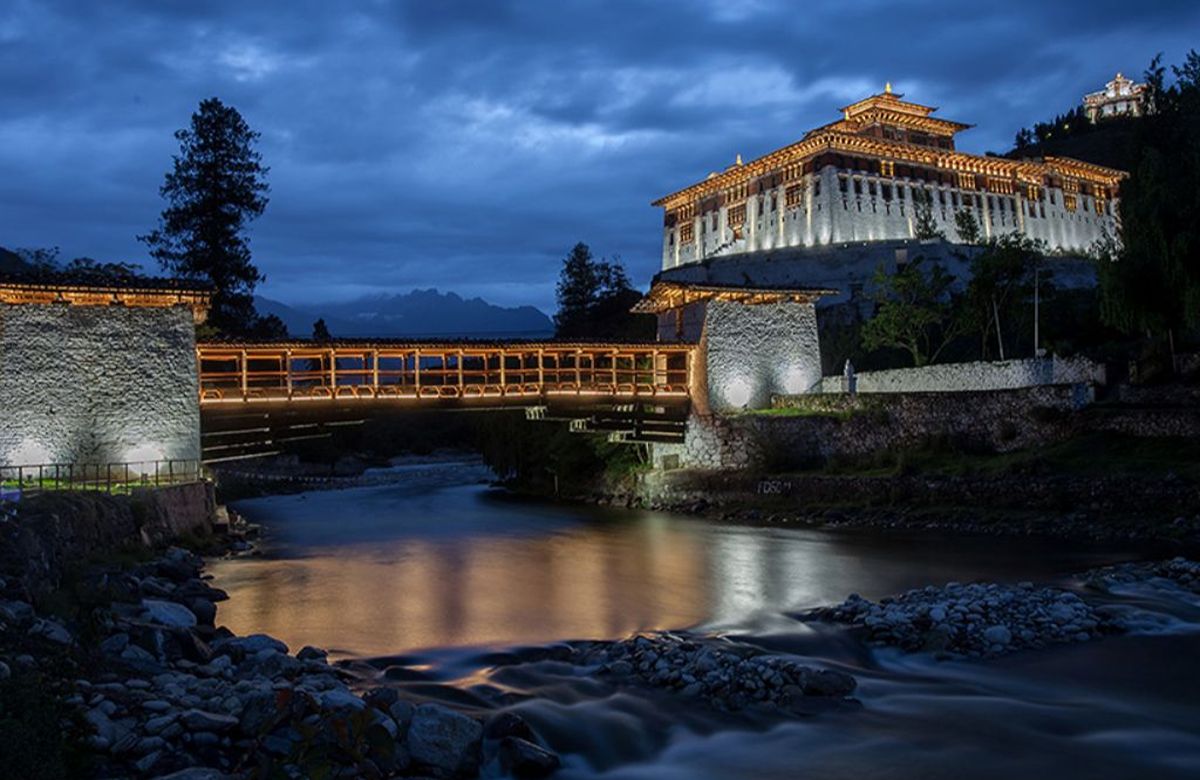
Photographs from the valleys this itinerary passes through. Ask us for more — we have a great many, and we would rather send you real ones than stock.


If yours is not here, send it — we answer properly and we will tell you if the trip is wrong for you.
It falls in the second month of the Bhutanese lunar calendar, which usually puts it in late March or early April — but the Gregorian dates move every year and are confirmed by the monastic body a few months ahead. Ask us and we will send you the confirmed dates for the year you are considering.
Yes, in the courtyard, and nobody will mind. Photography is not allowed inside temple buildings, and you should not use flash or step into the dancing ground. During the thongdrel, put the camera down for a minute and simply look at it.
Shoulders and knees covered, and long sleeves in the dzong. Many visitors have a kira or gho made in Thimphu and wear it — it is taken as a courtesy, not a costume, and your guide can arrange it.
Read these before you enquire. Everything here is written so that nothing on the page above reads as a promise we cannot keep.
Tshechu dates follow the Bhutanese lunar calendar, are published each year, and are subject to official confirmation. Dates will be reconfirmed before final travel arrangements are made. Seating in the dzong courtyard is public and unreserved; we arrive early with you rather than promising a reserved place, and no special or private access is implied.
You sleep between the altitudes shown at the top of this page. Take the first day slowly, drink more than feels necessary, and tell your guide immediately about headache, nausea or unusual breathlessness.
Hot stone baths, farmhouse meals, archery, rafting, meditation sessions and monastery visits are arranged locally and are subject to availability, weather, river conditions and the monastic calendar. Where something cannot run on the day, your guide will offer an alternative.
Hotels are named in your final itinerary and quotation rather than on this page. Properties are certified by the Department of Tourism and are confirmed once your dates are held; if a substitution becomes necessary we will tell you before you travel and will not move you to a lower grade without asking.
International flight routes, frequencies and schedules vary by season and change at short notice. Current connections will be confirmed during trip planning. Leave a night either side of your Paro flights rather than booking a same-day onward connection.
The visa application fee is US$40 per person, one-time and non-refundable, and the Sustainable Development Fee applicable to your dates will be identified as a separate line in your quotation. Comprehensive travel insurance, particularly medical and emergency evacuation cover, is strongly recommended; it is not a government visa requirement.
Roads, weather, monastic calendars and local events can all move a day around. Your guide will discuss any change with you at the time, and the shape of the trip is yours to adjust before you travel and, for most days, on the morning.
Every journey is individually quoted. Tell us your travel dates, the number of travellers, your accommodation preference and anything you would like changed about the Paro Tshechu itinerary, and we will prepare a detailed quotation for your trip.
Fields marked * are required. Prefer to write directly? evergreentcpf@gmail.com · +975 77439181
Your details are used to answer this enquiry and nothing else — no mailing list and no resale.