A tshechu is a religious observance danced in a dzong courtyard, not a performance staged for visitors. Here is what you are looking at, how to behave, and the thirteen worth building a trip around.
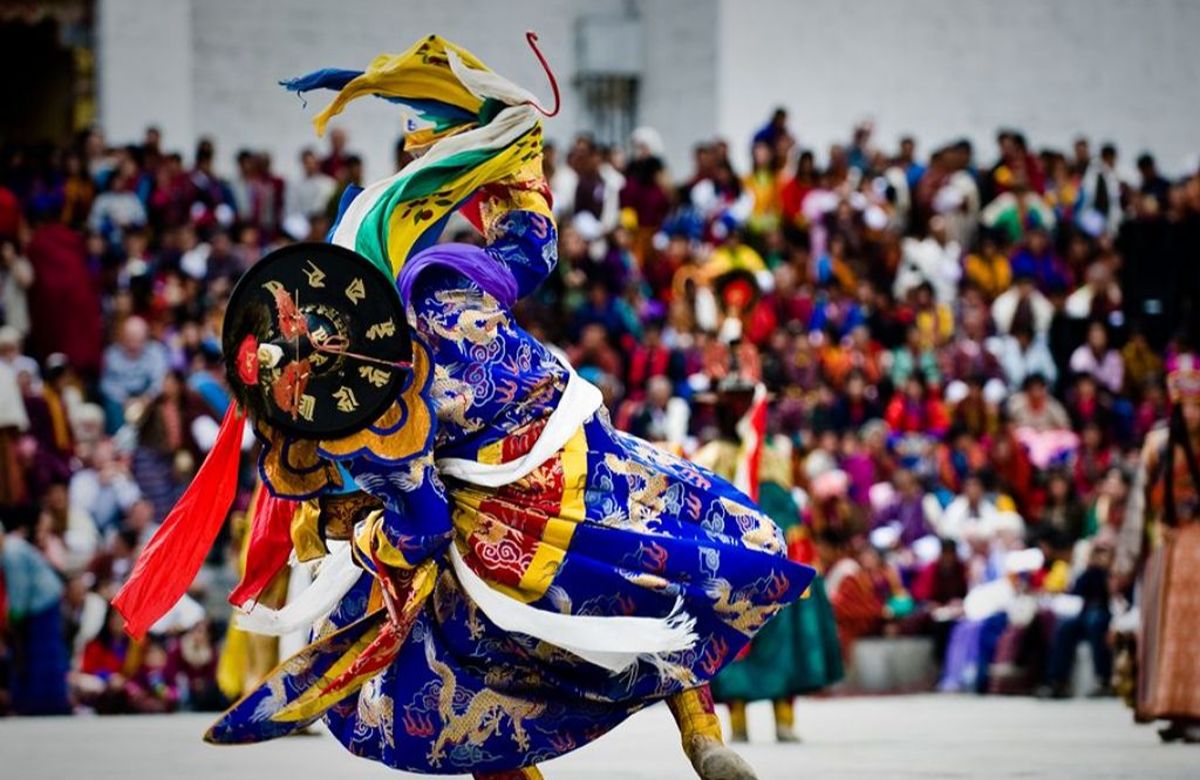
A tshechu — literally ‘tenth day’ — honours Guru Rinpoche, and is held on the tenth day of a month in the Bhutanese lunar calendar. The dances, cham, are performed by monks and trained laymen in masks representing wrathful and peaceful deities. Watching them is understood to accumulate merit, which is why families come in their best kira and gho and sit on the flagstones from dawn.
Between the dances the atsara — clowns in red masks with long noses — work the crowd. They are not comic relief in the western sense; they hold ritual authority, keep order, and are licensed to be obscene about anyone present, including officials.
The final morning of the larger festivals brings the thongdrel: an appliqué silk scroll several storeys high, unrolled down the face of the dzong in darkness and rolled away before sunlight touches it. Seeing it is said to liberate on sight. It is the one thing worth setting an alarm for at half past four.
Festival dates follow the Bhutanese lunar calendar, so the Gregorian dates move by two to four weeks every year and are published a few months ahead. The windows below are the months each festival normally falls in — they are not the dates. Tell us the year you are considering, for example Paro Tshechu 2027, and we will send you the published dates for it.
Festival dates are subject to official confirmation and may change. Dates will be reconfirmed before final travel arrangements are made. Seating in a dzong courtyard is public and unreserved, and we do not promise reserved seating, private viewing areas or special access.
| Festival | Where | Usual window | What happens |
|---|---|---|---|
| Punakha Drubchen & Tshechu | Punakha | February – March | Pazap militiamen re-enact the seventeenth-century defeat of a Tibetan invasion, followed immediately by three days of masked dance and a dawn thongdrel. Warm valley, few foreign visitors. |
| Losar | Nationwide | February – March | Bhutanese new year. Not a public spectacle so much as a family occasion — archery, food, house blessings. Offices close. |
| Paro Tshechu | Paro | March – April | The largest spring festival in the country, five days in the Rinpung Dzong courtyard, closing with the Guru Thongdrel unfurled before sunrise. |
| Ura Yakchoe | Bumthang | April – May | Three days in the highest of the Bumthang valleys, built around a sacred image displayed only at this festival. Small, local and largely unvisited. |
| Nimalung & Kurjey Tshechu | Bumthang | June – July | Two festivals days apart in the same valley, both with thongdrel displays. Monsoon season, so green, wet and very quiet. |
| Haa Summer Festival | Haa | July | Not a tshechu — a nomad and highland-culture festival with yak products, traditional sports and Haap food. Two days, entirely outdoors. |
| Thimphu Tshechu | Thimphu | September – October | The biggest festival in the country by attendance, in the Tashichho Dzong courtyard, preceded by three days of Thimphu Drubchen. Crowded, and spectacular. |
| Wangdue Tshechu | Wangdue Phodrang | September – October | Ends with the Raksha Mangcham, the dance of the ox, and a thongdrel. Falls immediately before Thimphu, so the two can be combined. |
| Jambay Lhakhang Drup | Bumthang | October – November | The mewang fire ceremony, and the tercham — the naked dance — performed by firelight around midnight at one of the oldest temples in the Himalaya. Attended almost entirely by Bhutanese. |
| Black-Necked Crane Festival | Phobjikha | 11 November (fixed) | Held in the Gangtey Goenpa courtyard on the king’s birthday, with crane dances performed by local schoolchildren. Small, and genuinely charming. |
| Mongar & Trashigang Tshechu | Eastern Bhutan | November | Two eastern festivals days apart. Sharchop-speaking country, very few outside visitors, and a long drive to reach. |
| Druk Wangyel Tshechu | Dochula | 13 December (fixed) | Danced by the Royal Bhutan Army rather than monks, at 3,140 metres on the pass, with the Himalaya behind the courtyard. Unique, and freezing. |
| Trongsa & Lhuentse Tshechu | Central & East | December – January | Winter festivals in two of the least-visited dzongs in the country. Cold, clear and almost entirely local. |
Both keep the days either side deliberately quiet, because two full days in a courtyard is tiring in the best way.
Two days in the Rinpung Dzong courtyard, the Guru Thongdrel before dawn, then the Chele La and the Haa valley. Built around the published dates for the year you travel.
The pazap re-enactment and the masked dances that follow it, in the warmest valley in the country at the clearest time of year.
Festival weeks fill the valley — Paro and Thimphu especially. We book accommodation a season ahead, so the earlier you ask, the better the rooms. Dates are reconfirmed before anything is finalised.